Guest experience is not a feeling — it’s a system. Here’s how to build one.
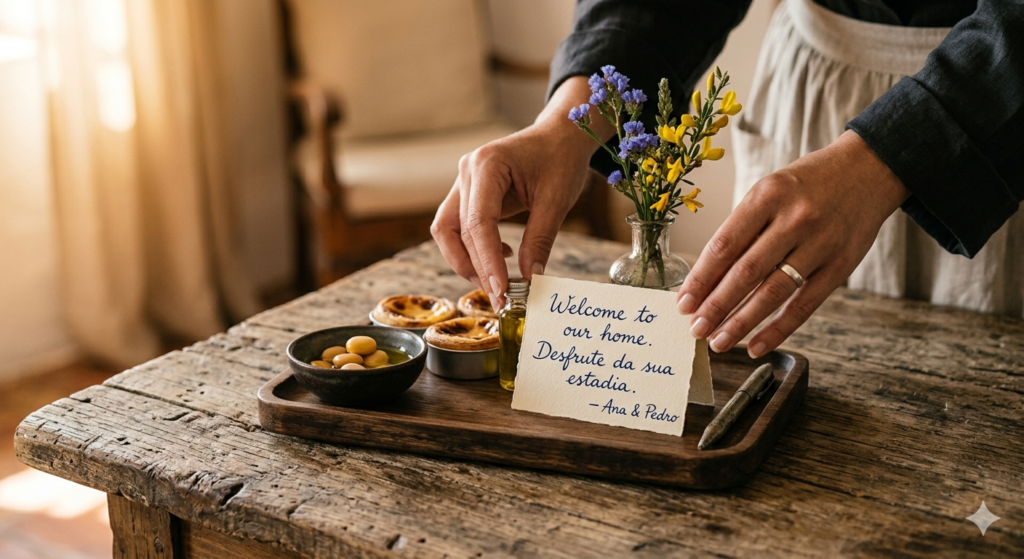
The best accommodation review I ever read for one of my clients didn’t mention the room size, the view or the breakfast. It said: “I felt like they were expecting me specifically.”
That feeling didn’t happen by accident. It happened because there was a system behind it — a sequence of small, intentional gestures that created the impression of personalised attention even when the host wasn’t physically present.
This is the misunderstanding at the heart of most hospitality operations: the belief that great guest experience is the result of good intentions and natural warmth. It is, partly. But intentions without systems produce inconsistency. And inconsistency is the enemy of reputation.
The guest journey has more contact points than most operators think
When accommodation owners think about guest experience, they tend to think about the stay itself — the room, the breakfast, the service during the visit. But the guest’s experience starts long before they arrive and continues long after they leave.
It starts with the booking process. How easy was it? Did the confirmation email feel like an automated form or like a message from a real person who was looking forward to the visit?
It continues with pre-arrival communication. Did anyone reach out before the guest arrived? Was there information about parking, check-in time, local recommendations — sent proactively rather than waiting for questions?
It includes the arrival moment, which is disproportionately important. First impressions anchor the entire stay. A guest who arrives to something unexpected and positive — a small local product, a note that references something specific about their trip — enters the experience with a different emotional baseline than one who gets a standard check-in.
It covers every interaction during the stay, and ends — or doesn’t — with the post-departure follow-up. A message that thanks the guest, invites feedback and offers them a direct booking link for their return creates the foundation of a relationship that most accommodation businesses never build.
What a guest experience system actually looks like
A system is simply a set of defined actions, done consistently, by anyone on the team — not just the owner.
For a small accommodation business, this doesn’t need to be complex. It needs to be documented, trained and followed.
At the core, it means having a clear guest journey map — every touchpoint from booking to post-departure, with defined actions and responsible parties at each stage. What gets sent, when, by whom and in what tone.
It means having a welcome protocol that doesn’t depend on the owner being present. If the host isn’t there for check-in, what does the guest find? Is it warm, personal and complete — or generic and functional?
It means having a local knowledge document that staff can use confidently. Restaurants to recommend, places to avoid, seasonal events, transport options — curated with genuine knowledge rather than a list of whatever has a Google sticker in the window.
And it means having a feedback loop that is systematic, not passive. Not just waiting for reviews on Booking — actively asking guests about their experience before they leave, when there is still time to address anything that wasn’t right.
The reviews you get are a reflection of the system you have
Every review on Google or Booking is, in effect, a report on your guest experience system. Read them as such.
When reviews consistently mention warmth, attention to detail and feeling welcome, that’s a system working. When they consistently mention communication issues, unmet expectations or feeling like one of many rather than a specific guest, that’s a system with gaps — or the absence of one.
The single highest-return investment most accommodation businesses can make is not a renovation or a new amenity. It’s designing and documenting the guest experience they want to consistently deliver — and building the team capability to deliver it without the owner carrying the whole thing personally.
That’s operational work. It’s not glamorous. But it’s what turns a property with good intentions into a property with a great reputation — consistently, scalably, and without depending on any single person being present at every moment.
If you want to map your guest journey and identify where the gaps are, that’s a conversation worth having. Reach out.